
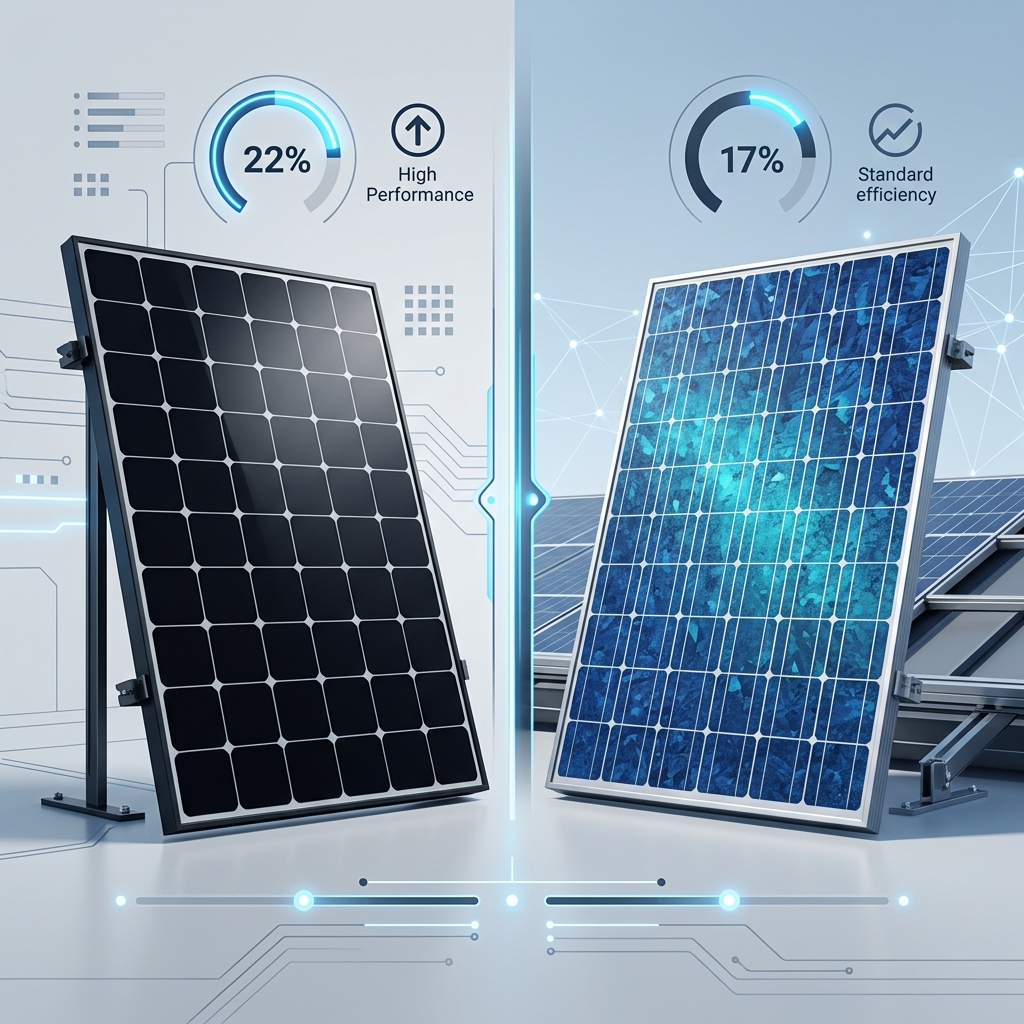
When shopping for solar panels, you'll encounter two main types: monocrystalline and polycrystalline. Here's a clear comparison to help you decide.
Monocrystalline panels:
- Made from single crystal silicon
- Dark black appearance
- Higher efficiency: 20-22%
- Better performance in low light and high temperatures
- More expensive per watt
- Ideal for limited roof space
Polycrystalline panels:
- Made from multiple silicon crystals
- Blue speckled appearance
- Lower efficiency: 16-18%
- Slightly lower performance in extreme heat
- More affordable per watt
- Good for larger roof areas
Which is better for Indian conditions?
For most Indian homeowners, monocrystalline panels are the better choice today. Here's why:
- Prices have dropped significantly, narrowing the cost gap
- Higher efficiency means fewer panels and less roof space needed
- Better performance in the high temperatures common across India
- Longer degradation warranty (typically 0.5% vs 0.7% per year)
However, polycrystalline still makes sense when:
- You have plenty of roof space
- Budget is the primary constraint
- The installation is temporary or short-term
What about bifacial panels?
Bifacial panels generate electricity from both sides, capturing reflected light from the surface below. They're gaining popularity for commercial installations but are typically overkill for residential use.
SolarWale recommends Tier-1 monocrystalline panels for most residential installations in Central India. We work with brands like Adani, Tata, Waaree, and Vikram Solar to ensure quality and warranty support.